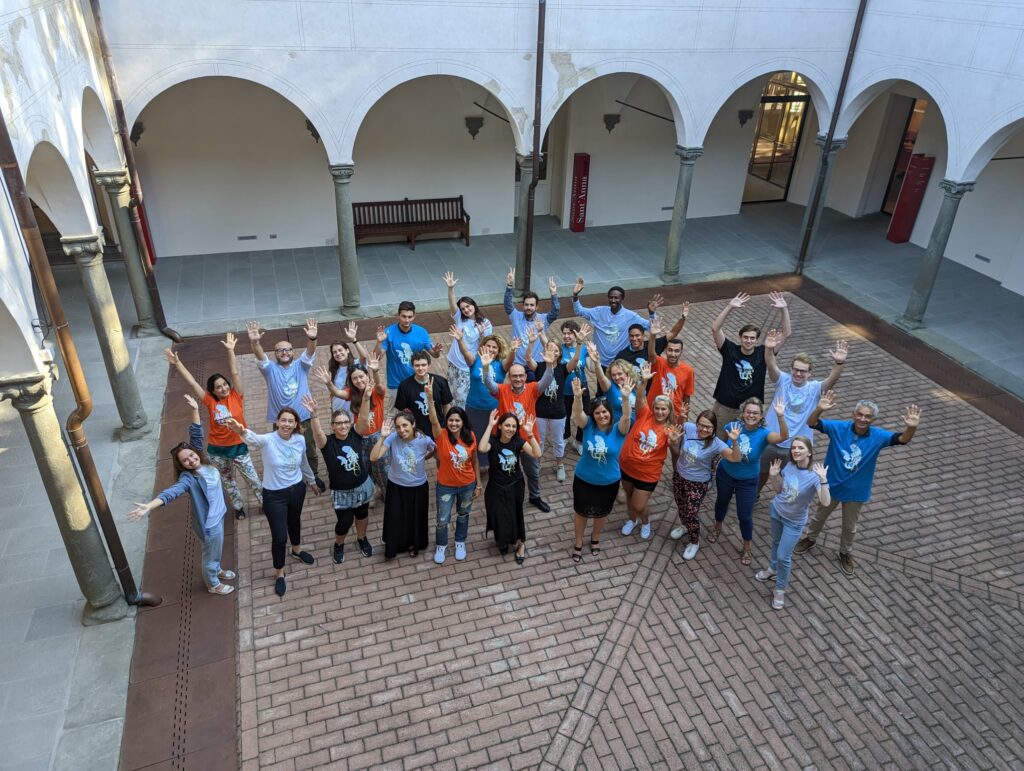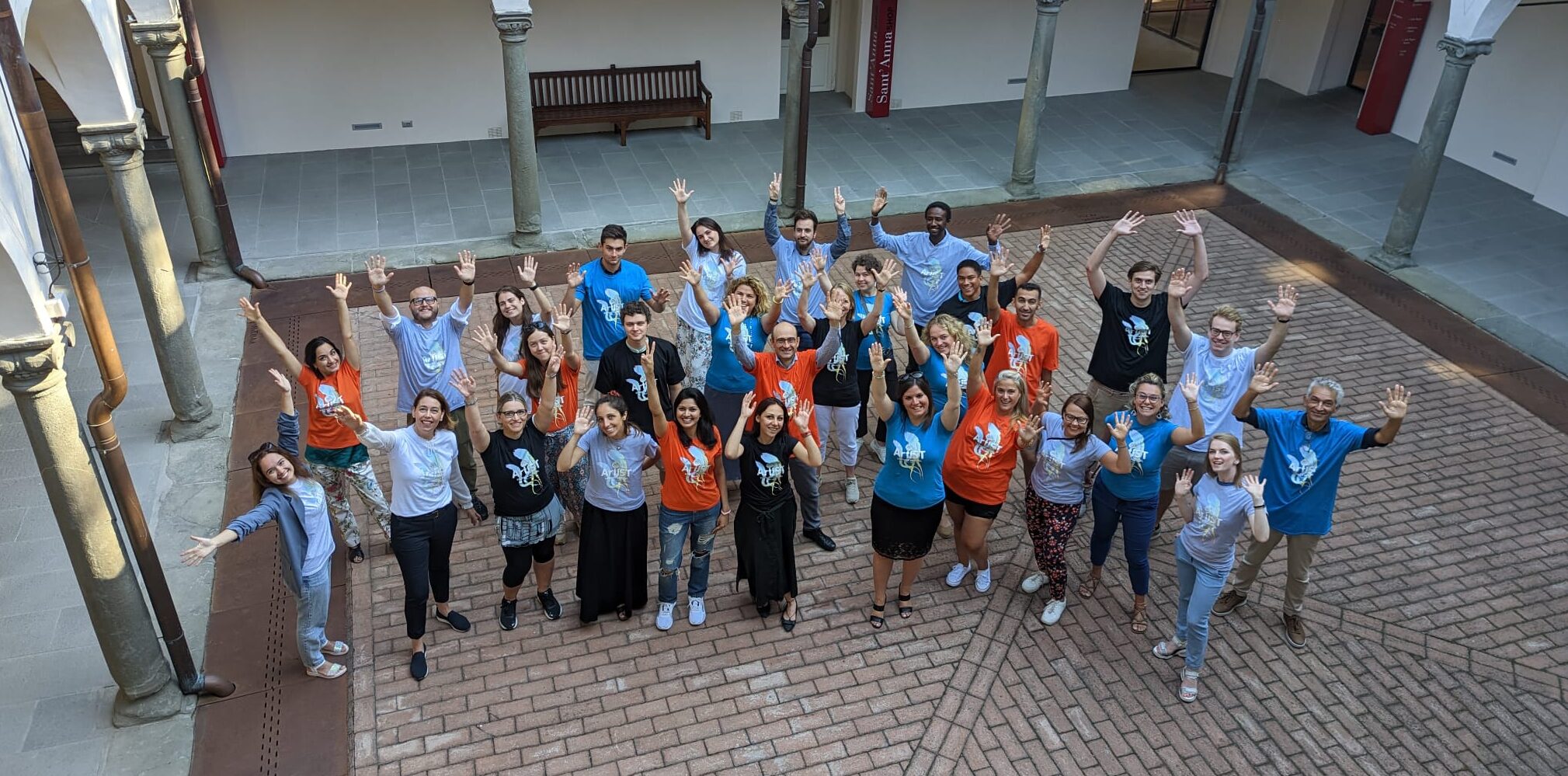
Our event was intended to be a contribution to the whole Pilot project, following suggestions and patterns of the previous Winter, Spring and Summer schools and adding an Italian “comparative advantage” and more ideas. Our goal was to give to beauty and Pisan artistic masterpieces the spotlight, but also to tell stories on entrepreneurship and success in the arts and cultural local panorama.
Our project developed in particular with a chessboard structure during the whole week, with four horizontal lines (topics) and three vertical lines (types of events).
Very important for the planning and development of the Pisa Summer School was the previous Spring School that took place in Paris, at the facilities of “Le Cnam ” in April 2022. From the beginning, we tried to follow the same structure, as we proposed to the participants lectures, visits to innovative companies, museums and a city tour.
Also, the Paris experience was useful to create very good relationships between the partners and a shared event that could bring many profitable moments of sharing and brainstorming, creating shared memories important for future developments.
When we met with the partners in Pisa, thanks to the previous team calls and also the meeting that took place during the Summer at the R&D Trento Conference, we were ready to jump into our Pisan adventure and to give life to a new phase of our ArtIST Project.
1. THE OBLIQUE TOPIC
Beauty as a driver for innovation and entrepreneurship
The title of our Summer School (and also a catch phrase), was “Il Bello”, which in Italian means “the beauty”. We chose this title because Tuscany (and Pisa) is considered as one of the most beautiful places in Italy and Europe.
Italy is known worldwide for being the “Bel Paese” – the beautiful country – , thanks to its landscapes, monuments, historical buildings that are pieces of art themselves, rivers, mountains, hills and blue skies (this title was first used by Dante and Petrarca in their literary works). We believed that what we could focus on and share with our European partners and students was a project with beauty at its center, and then declined in many topics that are well representative of our culture: music, museums, the environment, but also the beauty of entrepreneurship and its innovations, and arts festivals.
For each of these topics, to be shared during the Summer School in Pisa, we tried to build a framework, or a “Chessboard”, to offer to our guest the best experience possible both from an academic, and from a simply “fun” point of view. The event also wanted to create something that could last in the students’ memories for a very long time and that could be enjoyed and shared all over the EU.
As done before, we put the stress on innovation as a changing force for the future, and also on entrepreneurship. For this reason, the speakers involved gave students many suggestive case studies to learn from, while our visits focused on cultural realities that were not only creators of beautiful art and products, but also companies with a clear mission in their minds.
This oblique part can metaphorically refer to the symbol of the city: the leaning tower. The tower is not perfect, but its something that connects all the people that visit the city. Its a beautiful piece of art, and innovation. It lasted for centuries, not only in a physical way, but also in the memories of millions of visitors from all over Europe and the world.
2. THE HORIZONTAL FRAMEWORK
A semi-fixed structure developed into three main moments
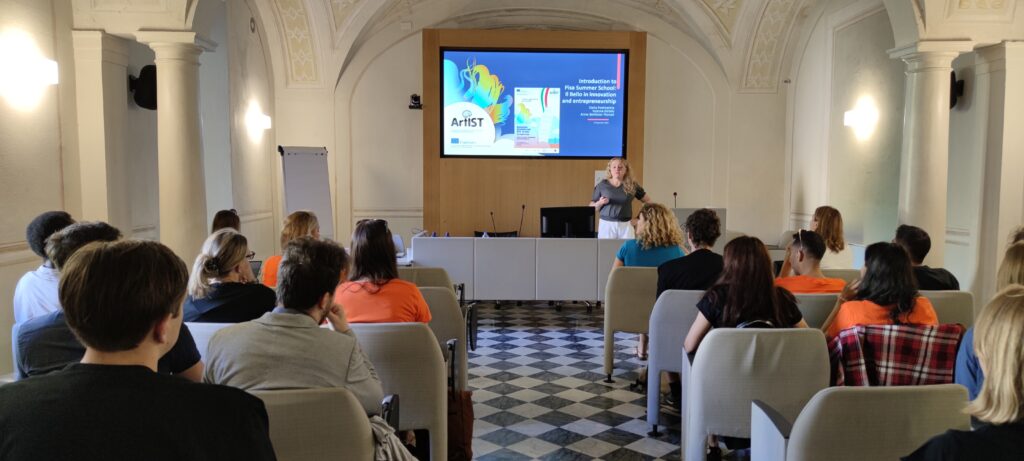
As stated before, our framework was built taking into consideration two dimensions. To start, we developed an horizontal structure based on three main pillars: frontal lectures in the mornings, thematic workshops before lunch (usually), and visits/meetings in the afternoons.
This was planned considering the successful and inspiring previous experiences at Miskolc and Paris. We could say that we learned from the past schools and we tried to improve our product by adding something typical of Italy and Tuscany.
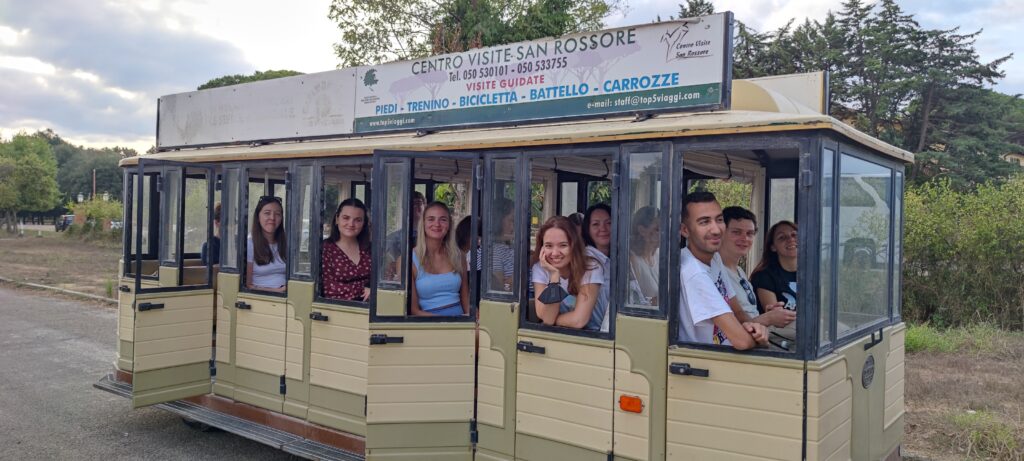
The only big change we decided to make compared to Miskolc and Paris was to move the whole team and participants for a full day in an external location, the San Rossore Park and Villa del Gombo. This was intended to offer a unique experience to the students and partners in one of the best public Italian parks and in a historical Presidential Villa.
Apart from lectures, a very important role in this framework was played by the workshops. The contents of them were useful for students to work on their daily reflections and the final group work. For example, the first three workshops of Norma Rosso, Yulduz Khairullina and Marco Martinelli, which took place on Monday and Tuesday, gave students important technical skills and ideas to start the week with positive energy and creativity. While in San Rossore, Professor Chiarello gave the students the ability to fill the space of the Villa and to literally create new movements and arts inside the building.
The visits saw, when possible, a meeting with a Director or Manager of the realities we included in the project. At Puccini Foundation students could learn the history of the Italian composer and also the challenges to the management of such a complex artistic reality. At Viareggio Carnival, the President told the audience many useful insights. Both in Torre del Lago and Viareggio, students could visit the Puccini house museum, and the Carnival Museum and hangars.
3. THE VERTICAL FRAMEWORK
A 4 themes immersive experience
Regarding the vertical aspects of our chessboard, we wanted to develop a single theme and to develop it through the three key moments.
For example, the first day of our Summer School wanted to focus on Music and in particular on Opera. For this reason, we offered the students a frontal lecture by Professor Nicola Bellini in the morning (the theoretical experience), while in the afternoon we moved the whole group to the Bellini Foundation in Torre del Lago. There, students met the Director of the Foundation (the managerial experience), used the facilities by attending a workshop (the dance movement), and also visited the place (visit to the theater and also the Puccino House museum) having an immersive experience into the beauty of arts and culture.
The second day was the case of Museums. In the morning we invited Professor Carrozzino, who highlighted the role of immersive technologies to the museum experience. So he added innovation and new tech to a very classical way of collecting pieces of art. Then, in the afternoon, we brought students through the city center (Pisa is a living museum experience itself) and then to the Museum of Ancient ships, where students could learn the history of the city and many interesting insights.
The third day, the “San Rossore Day”, we wanted to highlight the beauty of the Environment. For this reason we brough students to San Rossore Park, and let them literally “enter a new world”, separated by the city center of Pisa, in which beauty is everywhere, and where arts and culture need to be innovatively organized to be promoted and to create new businesses. In the morning, a frontal lecture, then a creative thinking workshop and the visit was at the park itself, its natural and peaceful marvels. The day concluded with a bath in the Tuscany sea, highly appreciated by partners and students.
The final day we dedicated the day to the beauty of Entrepreneurship and Creativity. For this reason we invited professor Schiuma to give a lecture on “The power of arts for developing organizations and innovation processes”. Then it was time for the COTEC Foundation, led by Presidente Nicolais, and we presented their annual reports to our students. We invited innovative companies to Pisa, and their Managers to tell the participants how art could meet with innovation. The final visit of the week was to Viareggio, where students could literally “touch with hands” the union between innovation and creativity, bringing to the “Viareggio Carnival”, one of the most famous carnivals in the world.